Some of the links in this article are "affiliate links", a link with a special tracking code. This means if you click on an affiliate link and purchase the item, we will receive an affiliate commission.
The price of the item is the same whether it is an affiliate link or not. Regardless, we only recommend products or services we believe will add value to our readers.
By using the affiliate links, you are helping support our Website, and we genuinely appreciate your support.

Tuesday, 6:42 PM. I’m standing in my kitchen in Austin, staring into an open fridge like it’s a portal to another dimension. My brain feels like a pile of lukewarm sludge. I’ve been staring at my laptop for eight hours, my neck is stiff, and the thought of “meal prepping” or “calculating macros” makes me want to lie face down on the floor. All I wanted was something that wouldn’t make me crash in thirty minutes, but all I could see was a half-empty jar of pickles and a wilted bag of spinach.
This is the moment where most people fail. We tell ourselves we’ll eat “clean,” but then reality hits. We end up grabbing a sleeve of crackers or a massive bowl of plain pasta because it’s easy. And then? The 9 PM sugar crash. The heavy, bloated feeling that makes sleep impossible. The cycle of “healthy eating” is broken because it’s too much work. It’s too much math. It’s too much thinking.
But here’s the thing — you don’t need a degree in nutrition to stop eating like a zombie. You don’t need to weigh every single blueberry on a digital scale. After eight years of researching nutrition (and many, many failed attempts at extreme diets), I finally figured out [how to build a balanced plate without overthinking it](https://ambitiouskitchena.com/category/healthy-meal-prep/). It’s not about perfection. It’s about a simple, visual system that works even when your brain is fried.
The “Sludge” Phase: Why Your Current Meals Are Failing You
We’ve all been there. You eat a huge bowl of cereal or a massive bagel for breakfast, and by 10 AM, you’re searching for a second cup of coffee just to stay upright. Or maybe you have a “salad” that’s basically just iceberg lettuce and a handful of croutons. It feels light, but twenty minutes later, your stomach is growling and your energy is in the basement.
Why does this happen? It’s not magic. It’s biology. When you eat a meal that’s mostly “fast” carbs—think white bread, sugary cereals, or just plain pasta—your blood sugar spikes like a rocket. Your body releases a massive amount of insulin to deal with it. And then? The crash. Your blood sugar plummets. Your brain literally loses its fuel source. This is when the brain fog rolls in. This is when you feel like you’re walking through a swamp.
My best friend, who is a doctor, calls this the “glucose roller coaster.” It’s exhausting. It’s also why you feel “hangry” even when you’ve just eaten. You aren’t hungry for food; you’re hungry for a blood sugar spike. To fix this, we have to stop thinking about “diets” and start thinking about “structure.” We need to build a plate that acts as a slow-release energy bar for your body. Instead of a spike, we want a steady, gentle stream of fuel.
Actually, it’s simpler than that. You don’t need to track every calorie. You just need to follow a visual guide. If you’re struggling with [the best morning nutrition habits](https://ambitiouskitchena.com/category/breakfast-ideas/), this plate method is going to be your new best friend.
The Secret: The “Hand Method” (No Scale Required)
So, how do we actually do this when we’re tired? We use our hands. Seriously. Your hands are the most portable, non-technical kitchen tools you own. This is how you learn [how to build a balanced plate without overthinking it](https://ambitiouskitchena.com/category/healthy-eating/) every single time, whether you’re at home or at a restaurant.
Here is the breakdown. It’s not a law, it’s just a guide. If you follow this, you’ll feel a massive difference in your energy levels within about three days.
1. The Protein (Your Anchor)
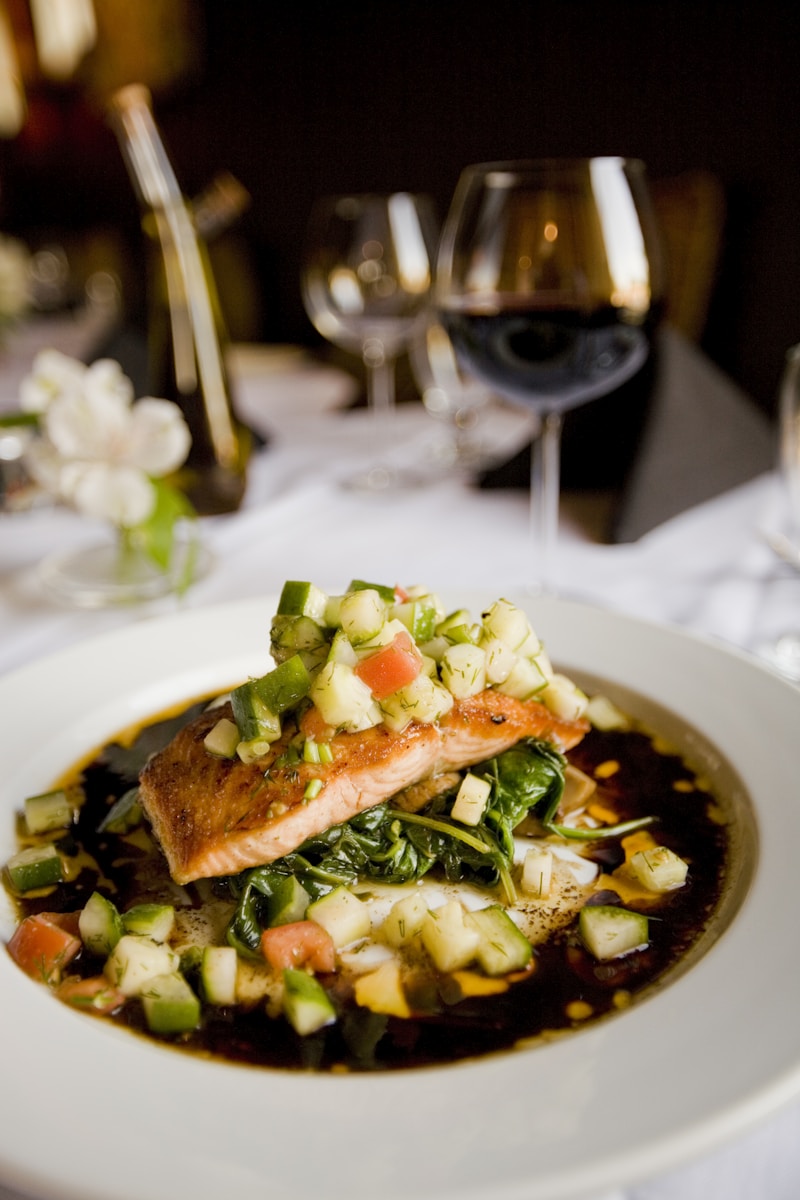
Think of protein as the anchor of your meal. It’s what tells your brain, “Hey, we’re full. Stop looking for snacks.” A serving of protein should be roughly the size and thickness of your palm. This could be chicken, salmon, tofu, two eggs, or even a hearty serving of Greek yogurt. Protein takes longer to digest, which is exactly what we want. It slows down the absorption of everything else on your plate.
2. The Fiber (The “Volume” Hack)
This is the part most people skip, and it’s the biggest mistake. You need a massive pile of color. Vegetables! Think of your veggies as “volume.” They fill your stomach up physically without adding a mountain of calories. A serving of veggies should be at least two fist-sized portions. Broccoli, peppers, zucchini, kale—the more color, the better. The fiber in these veggies acts like a buffer, slowing down the digestion of your carbs even more. It’s like a speed bump for your blood sugar.
3. The Healthy Fats (The Satiety Secret)
Fat is not the enemy. (I know, my mom sent me an article once claiming all fat is bad, but she was wrong. Gently, Mom!) Fat is what makes a meal feel *satisfying*. Without fat, you’ll be looking for a snack 30 minutes later. You want a portion about the size of your thumb. Avocado, olive oil, a sprinkle of nuts, or some seeds. Just a little bit goes a long way.
4. The Carbs (The Fuel)
Carbs are not “bad.” They are your brain’s preferred fuel. The trick is the type and the amount. Instead of a massive pile of white rice, aim for a portion about the size of your cupped hand. Think complex carbs: sweet potatoes, quinoa, brown rice, or even a piece of sourdough. These are “slow” carbs. They provide steady energy without the violent spike.
Funny thing is—when I first started doing this, I felt like I was eating way too much food. My brain was so used to the “small salad, big pasta” mistake that a plate full of chicken and roasted veggies felt huge. But by day four? The constant snacking disappeared. The “sludge” in my brain cleared up. It was wild.
Real-Life Scenarios: Because Life Isn’t a Kitchen Set
A common mistake is thinking you can only do this if you’re cooking a gourmet meal from scratch. Let’s be real. Sometimes you’re ordering takeout. Sometimes you’re grabbing something from a gas station. Here is how you apply the “balanced plate” rule when life gets messy.
The “I’m Too Tired to Cook” Dinner
You have a rotisserie chicken from the grocery store and a bag of pre-washed salad mix. Perfect.
- Protein: A big chunk of that chicken (palm-sized).
- Fiber: The entire bag of salad mix + some sliced cucumbers.
- Fat: A drizzle of olive oil or some feta cheese.
- Carb: A piece of whole-grain toast or a handful of berries.
Total prep time: 3 minutes. Total brainpower required: Zero.
The “Dining Out” Strategy
When you’re at a restaurant, the portions are usually huge and heavily loaded with carbs. Here’s the move: Order a protein (steak, salmon, chicken) and double up on the vegetable side. If they only offer fries as a side, ask for a side salad or steamed veggies instead. If you can’t swap it, just eat half the fries and focus on the protein and veggies. It’s about the ratio, not about being a monk.
The “Work Lunch” Hack
If you’re meal prepping, don’t try to make 10 identical containers of something boring. Instead, prep “components.” Roast a big tray of veggies, cook a batch of quinoa, and grill some chicken or tofu. When lunch rolls around, you just grab a handful of each. This is a huge part of [easy healthy meal prep](https://ambitiouskitchena.com/category/healthy-meal-prep/) that actually sticks.

Common Pitfalls: What to Watch Out For
Even with a good plan, there are a few traps that can trip you up. One of them is the “hidden sugar” trap. You might build a perfect plate, but then you wash it down with a “healthy” fruit smoothie that has 50g of sugar. Or a balsamic glaze that is basically syrup. This will undo all your hard work. Stick to water, sparkling water, or tea. (And yes, coffee is fine, but please, for the love of all things holy, drink some water first!)
Another thing? Don’t be too hard on yourself. You’re going to have nights where you eat a giant bowl of mac and cheese. It happens. I’ve been there. The key is not to let one “unbalanced” meal turn into an “unbalanced” weekend. Just make your very next meal follow the hand method. That’s it. One meal at a time.
Wait, I should mention one thing—and this is important—the “balanced plate” is a tool, not a prison. If you’re at a birthday party and there’s incredible cake, eat the cake! Just try to have some protein and fiber before you dive in. It’ll make the sugar spike much less violent. Balance is a lifestyle, not a single moment in time.
TL;DR: Your Action Plan for Tomorrow
If you’re feeling overwhelmed, let’s just do one thing. Forget the fancy recipes for now. Forget the complicated diets. Just focus on the structure.
Tomorrow’s Mission: At your very first meal, look at your plate. Do you have a palm-sized protein? Do you have two fist-sized portions of veggies? Do you have a thumb of fat? If not, add them. That is your only job. Once you do this for three days, you’ll start to feel the energy return. The fog will lift. The “sludge” will disappear. You’ll be amazed at how much better you feel when you stop fighting your biology and start working with it.
I’m not a doctor (talk to yours before making massive lifestyle shifts!), but I have spent a lot of time looking at the data, and the data is clear: consistency beats intensity every single time. Stop trying to be perfect. Just try to be balanced.
What’s your biggest struggle with mealtime? Is it the morning rush or the evening exhaustion? Drop a comment below—I read every single one and would love to help you troubleshoot your plate!